Miniature stupa
The Chaitya Gruhas measuring 10.40 metres in length, 5.57 metres in breadth housed a statue of Dhyana Buddha and a miniature stupa and height of the structure though not physically available is projected to be 12 feet for the people to go into the solid burnt-brick walled structure.
Lime mortar was the joining mixture used for the moulded basement of the two structures and a miniature stupa.
New features
While the chaitya gruha that housed Dhyana Buddha statue once faces east while the one containing a miniature stupa faces west and are believed to be built during the rule of Satavahanas.
“From the time of origin of these chaitya gruhas on the Western Coast of India in 3rd BC they were considered principal structures of worship. Buddhist monks on the eastern coast added new features of veneration like those found in the apsidal chaitya gruhas of Salihundam, Ramateertham, Guntupalli and Amaravathi in Guntur district,” explained Mr. Das.
Creations
“These covered structures were basically for providing concentration to worshipper and were creations of masterminds of Dhakiniana School of monks.
These three-fold moulded basements with specially designed bricks for each layer were the germination of Tripattakumada Adhishtanams (basements) of late Hindu temples,” opined Assistant Superintendent Archaeologist D. Kanna Babu analysing the findings.
Those who assisted the archaeological team in bringing out these structures from under a mound, included W.V.S. Narasimham and Ch. Babji Rao, Assistant Archeologists, K. Veeranjaneyulu, Conservation Assistant and K.V.V.S.N. Murthy.
Courtesy : The Hindu |



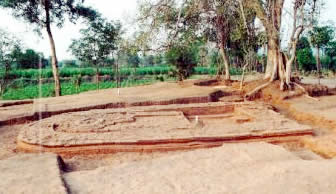 Archaeological Survey of India has discovered two Buddhist Chaitya Gruhas facing each other at Kantamanenivarigudem in West Godavari in the proximity of famous Guntupalli rock-cut temples.