Home >>  INDEPENDENCE DAY
• Snippets & Interesting Info
• Gallery
• Wallpapers
• Special Articles
• Jawaharlal Nehru and the War Years
• Where the Nehrus Lived
• Of Revolts and Conspiracies
• The Satyagrahi
• Darkness at Noon
• The Brave heart
• The Educator
• The French Colony that Fought the British
• The Frontier Gandhi
• The Great Escape
• The Princess Who Led Protest Rallies
• The Mahatma's abode
• The Queen's Final Battle
• The Royal Arch
• Shaheed Bhagat Singh Biography
• Tryst with Destiny
• The Tiger of Mysore's own den
• Where the Flag was Raised
• In Birsa Munda's Kingdom
• The Nightingale of India
• Bridging the Communal Divide
• Freedom ... to be
• The Mahatma and the Masses
• The Speech That Defined A Nation
• Swaraj he said, was his Birthright
• The Iron Man of India
• Freedom FOR THE Patrotic
• The great India Truth
Kids Special
• Mother India Speaks
• 64th Independence Day


Darkness at Noon
The Satyagrahi

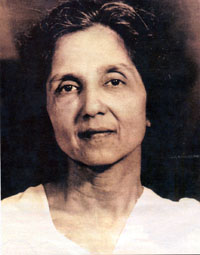
When a young Aruna Asaf Ali hoisted the Congress flag to symbolically start the Quit India movement in 1942, she became an overnight hero. Known for her bravery and her relentless fight against British colonialism, this socialist leader was awarded the Padma Bhushan as well.

Aruna Asaf Ali is widely rememb­ered for hoist­ing the Congress flag at the Gowalia Tank maidan in Bombay, during the Quit India Movement in 1942. Born as Aruna Gan­guli, she worked as a teacher after graduation. This, an achievement by itself for women in those days, was a teaser of the other major things she was capable of doing for the Independence strug­gle. Despite parental opposition and irrespec­tive of religion and age, Aruna married Asaf Ali, 20 years elder than her, in 1928.


Aruna protested the indifferent treatment of political prisoners by launching a hunger strike. Her efforts resulted in an improvement of con­ditions in the Tihar Jail but she was moved to Ambala and was subjected to solitary confinement. She was politically not very active after her release.

On August 8, 1942, when the AlCC passed the Quit India resolution, the government responded by arresting the major leaders and all members of the Congress Working Committee. A young Aruna presided over the remainder of the session on August 9 and hoisted the Congress flag at the Gowalia Tank maidan. This marked the commencement of the movement.

The police fired upon the assembly at the ses­sion. Aruna was dubbed the 'Heroine of the 1942 movement' for her bravery in the face of danger and was called the 'Grand Old Lady' of the Indepen­dence movement in her later years.

After Independence she was a member of the Congress Socialist Party, a caucus within the Congress Party for activists with socialist leanings. Disillusioned with the progress of the Congress party on socialism, she joined a new party, the Socialist Party in 1948. She however, left that party along with Edatata Narayanan and they visited Moscow along with Rajani Palme Dutt. Both of them joined the CPI before Stalin's death. In 1958, she was elected the first Mayor of Delhi. She and Narayanan started Link Publishing House and published a daily, Patriot and a weekly, Link the same year. In 1964, she rejoined the Congress Party but stopped taking part in active politics. She was awarded the Padma Bhushan in her life time.